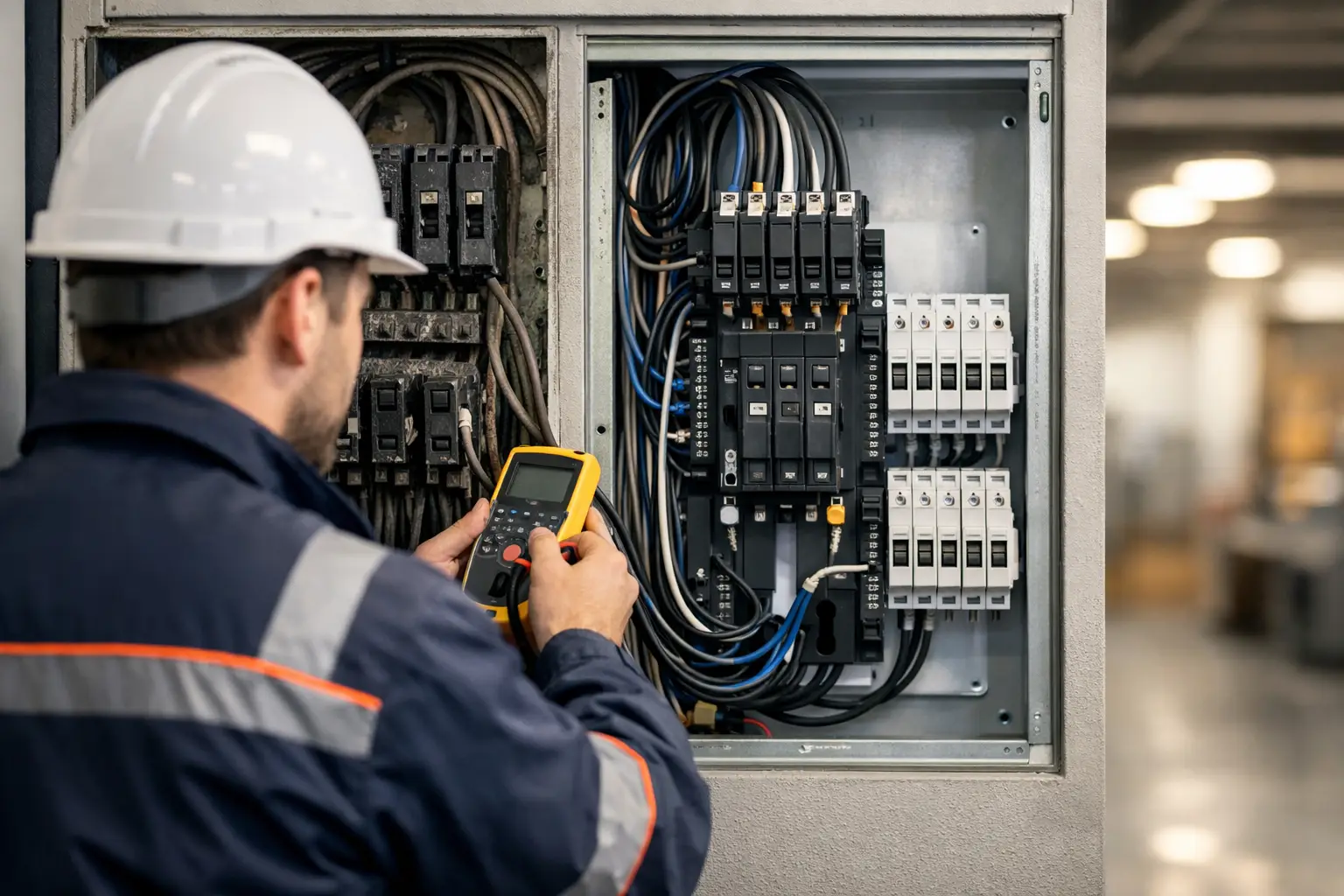
When Panel Retrofit and Upgrades Make Sense
A control panel rarely fails all at once. More often, the warning signs show up in pieces – nuisance faults, obsolete components, undocumented field changes, overloaded power supplies, or operators working around HMI and alarm issues that should have been fixed years ago. That is usually when panel retrofit and upgrades move from a deferred maintenance item to an operational decision with real production, safety, and compliance consequences.
Thank you for reading this post, don't forget to subscribe!For plants running aging PLC platforms, unsupported drives, legacy relays, or crowded enclosures, the question is not simply whether equipment is old. The real question is whether the existing panel still supports reliable operation, safe maintenance, and future process needs. In many cases, a well-scoped retrofit is the fastest path to better uptime and lower risk without the cost and disruption of a full system replacement.
What panel retrofit and upgrades actually involve
Panel retrofit and upgrades can mean anything from replacing a few critical components to re-engineering an enclosure around a new controls architecture. In industrial environments, the work usually goes beyond swapping hardware. It often includes updated electrical drawings, PLC and HMI migration, new network infrastructure, revised power distribution, improved short-circuit current ratings, and safety circuit validation.
That distinction matters. A cosmetic refresh does not solve hidden failure points such as heat loading, poor wire management, discontinued breakers, uncoordinated protection, or field devices that no longer align with the control strategy. A proper retrofit addresses both physical panel condition and control system function.
In practice, scope depends on production demands, installed base, and compliance exposure. A packaging line with a single obsolete PLC may need a focused migration. A process unit with multiple cabinets, hardwired interlocks, and incomplete documentation may require a broader modernization effort tied to safety, alarm management, and operations visibility.
The operational triggers behind panel retrofit and upgrades
Most retrofit projects start because the plant has already absorbed enough pain to justify action. Spare parts become hard to source. A failed card turns into a multi-day outage. Maintenance teams keep legacy equipment running through skill and improvisation, but each recovery takes longer and introduces more uncertainty.
Obsolescence is the obvious trigger, but it is not the only one. Many panels stay in service long past their design assumptions. New field devices get added, control logic grows, and operators need more diagnostics than the original system can provide. Over time, the panel becomes a bottleneck to productivity. It can no longer support process changes, recipe management, data collection, remote access controls, or modern alarm handling without substantial rework.
Safety requirements are another major driver. Older panels often predate current expectations around machine guarding, emergency stop architecture, arc flash labeling, or documented safety functions. That does not automatically mean they are noncompliant, but it does mean they should be evaluated against current risk and operational conditions. If a safety relay has been bypassed, an interlock no longer matches the process, or maintenance exposure is poorly controlled, upgrade work should be treated as a risk reduction project, not just an electrical refresh.
When retrofit is better than replacement
A full replacement sounds clean on paper, but plants do not operate on paper. Shutdown windows are limited, production commitments are real, and a complete rip-and-replace can create avoidable disruption if the field devices, enclosure footprint, or process sequence still have useful life.
Retrofit is often the better choice when the mechanical process is sound, the I/O count is manageable, and the core issue is controls obsolescence or panel reliability. Reusing enclosure infrastructure, field wiring pathways, and parts of the existing control design can reduce schedule risk and capital cost. It can also shorten commissioning time because operators and maintenance staff are not relearning an entirely new system layout.
That said, retrofit is not always the low-risk option. If the panel has severe space constraints, degraded enclosure integrity, undocumented modifications, or a control strategy built on years of ad hoc changes, trying to preserve too much can become more expensive than redesigning the system properly. The right decision depends on the condition of the installed base and the operational value of what can realistically be retained.
What should be evaluated before any upgrade begins
A panel upgrade should start with an engineering review, not a purchase order. Before selecting replacement hardware, the team needs to understand the current state of the system at both the cabinet and process level.
That includes verifying installed components against drawings, reviewing load calculations, checking thermal performance, confirming network topology, and identifying obsolete or single-point-of-failure devices. It also means looking at how the panel supports the process. Are operators getting the right status information? Are alarms meaningful or just noisy? Are interlocks documented and tested? Can maintenance troubleshoot faults without relying on tribal knowledge?
For many facilities, documentation is a hidden risk. If the panel drawings do not match the field condition, every future outage takes longer. Every modification carries more uncertainty. Retrofit projects are the right time to restore documentation discipline by updating schematics, panel layouts, I/O lists, device tags, and software backups.
Safety evaluation should be built into this phase, not added after hardware decisions are made. If the panel includes safety functions, the upgrade should review circuit architecture, device suitability, validation requirements, and any applicable SIL or PL expectations. A controls upgrade that ignores safety design can leave major exposure in place.
Common upgrade paths in legacy panels
The most effective upgrades are usually the ones tied directly to plant performance. Replacing an obsolete PLC with a supported platform improves maintainability, but the real value often comes from what that migration enables: better diagnostics, cleaner code structure, easier spare strategy, improved communications, and integration with SCADA, historians, or MES layers.
HMI replacement is another common step, especially where operators are still working from limited text displays or inconsistent screen logic. A modern HMI can reduce troubleshooting time, improve process visibility, and make abnormal conditions easier to identify before they become downtime events.
Power distribution and protection updates also deserve attention. Panels with aging breakers, overloaded transformers, or poorly coordinated branch protection are more than maintenance issues. They affect fault response, serviceability, and electrical safety. In some environments, arc flash analysis and labeling updates should be addressed as part of the retrofit scope.
Network and remote I/O changes can also deliver significant value, particularly in facilities trying to reduce cabinet congestion or improve diagnostics across a line. But these upgrades need discipline. More connectivity is useful only if the architecture is secure, documented, and maintainable by the site team.
The implementation mistakes that create more downtime
The biggest retrofit problems usually come from under-scoping the project. Hardware gets ordered before the field condition is fully verified. Software migration assumptions are made too early. Shutdown duration is based on best-case installation time instead of realistic commissioning needs.
Another common mistake is treating panel work as separate from process startup. A panel can be wired correctly and still fail operationally if sequence logic, permissives, scaling, alarm setpoints, or safety validation are rushed. Commissioning is where paper design meets actual plant behavior. That phase needs time, test plans, and the right engineering support.
Plants also get into trouble when they defer operator and maintenance considerations. If the upgraded panel is harder to troubleshoot, lacks clear labeling, or introduces inconsistent HMI behavior, the site inherits new friction even if the project technically met scope. Good retrofit work improves serviceability, not just control capability.
This is where an experienced automation partner matters. Firms such as SIS Automations approach panel retrofit and upgrades as part of a larger control system lifecycle – engineering review, migration strategy, safety assessment, implementation, testing, startup, and documentation. That approach reduces the chance of solving one problem while creating three others.
How to judge whether the project was successful
A successful retrofit is not defined by new hardware in the enclosure. It is defined by what happens after startup. Troubleshooting should get faster. Operators should have better visibility into machine and process conditions. Spare parts strategy should be simpler. Unplanned downtime tied to controls should decrease. Safety functions should be clearer, validated, and easier to maintain.
There should also be a measurable improvement in engineering control. Documentation should match the installed system. Software should be backed up, versioned, and supportable. Future modifications should require planning, not guesswork.
That is the real value of panel retrofit and upgrades. They are not just a way to keep old equipment running a little longer. Done correctly, they restore confidence in the control layer that production depends on every day.
If your panel has become a source of outages, workarounds, or safety concern, the goal is not to replace parts for the sake of modernization. The goal is to rebuild reliability where it matters most – at the point where electrical design, control logic, and plant performance meet.