Manufacturing Cybersecurity Trends 2026: 7 Priorities
A ransomware event that stops a packaging line is no longer only an IT incident. It can interrupt production schedules, force manual operation, compromise traceability, and create unsafe conditions during restart. The most consequential manufacturing cybersecurity trends 2026 will center on reducing that operational exposure without destabilizing the control systems that keep plants running.
Thank you for reading this post, don't forget to subscribe!For manufacturers, the question is not whether to add another security tool. It is whether the plant can identify critical assets, control access, contain an intrusion, and restore a safe process within an acceptable recovery window. The answer depends on the age of the controls environment, the number of connected vendors, the criticality of the process, and the maturity of existing engineering and maintenance practices.
Manufacturing Cybersecurity Trends 2026: The Shift to Operational Resilience
Security programs are moving beyond perimeter protection toward operational resilience. Firewalls, endpoint protection, and policy documents remain necessary, but they do not prove that a plant can continue operating safely after a compromised workstation, engineering laptop, or remote-access account.
In 2026, plant leaders will place greater emphasis on recovery objectives for OT systems. That includes knowing which PLC programs, HMI applications, SCADA servers, network configurations, historian data, and safety-system documentation are needed to restore production. It also means testing recovery procedures under realistic conditions instead of assuming backups will work when needed.
A recovery plan should distinguish between restoring a server and restoring a process. A server image may come back quickly, while validating recipes, controller logic, alarm settings, communications, and safety permissives can take much longer. That validation time should be part of downtime planning.
1. OT Asset Visibility Will Become an Engineering Requirement
Many manufacturers still lack a current, trusted inventory of industrial assets. The gap is common in facilities with decades of expansion, equipment acquisitions, contractor-installed skids, and partially documented modernization projects. Unknown devices cannot be reliably patched, monitored, segmented, or recovered.
The useful inventory is not simply a spreadsheet of IP addresses. It connects each asset to its operational role: PLC, safety PLC, HMI, managed switch, remote I/O rack, variable frequency drive, engineering workstation, historian, or vendor appliance. It should also capture firmware, communication paths, physical location, ownership, backup status, and the process or machine affected by failure.
Passive OT discovery tools can help identify networked assets, but they do not replace field verification. Controls drawings, panel inspections, PLC backup reviews, and interviews with maintenance personnel are often required to establish an accurate baseline. This is especially true for legacy serial networks, isolated cells, and undocumented connections between OT and business systems.
2. Network Segmentation Will Be Tied to Process Criticality
Flat plant networks create unnecessary blast radius. If a compromised business device can reach every controller, HMI, and engineering workstation, an incident can move from an office environment into production far too easily.
The 2026 approach is more disciplined: segment based on operational function and consequence. A packaging cell, a utilities system, a batch process area, and a safety instrumented system do not carry the same risk and should not have identical access paths. Zone-and-conduit design principles from IEC 62443 provide a practical framework for establishing boundaries and controlling traffic between them.
Segmentation is not a one-size-fits-all firewall project. Excessive restrictions can break time-sensitive communications, vendor diagnostics, or data collection. Engineers need to understand industrial protocols, controller dependencies, and startup requirements before changing network paths. The goal is controlled communication, not indiscriminate isolation.
3. Remote Access Will Face Tighter Identity and Session Controls
Remote support remains essential for many manufacturers. OEMs, system integrators, corporate engineers, and specialty maintenance providers often need access to troubleshoot equipment or support startup. The problem is not remote access itself. The problem is persistent, shared, poorly monitored access into production networks.
Expect more plants to require named accounts, multifactor authentication, role-based privileges, approval workflows, and time-limited access. Remote sessions should pass through a controlled jump environment rather than directly connecting an external device to a PLC network. Session logging and, where appropriate, recording provide accountability when changes are made during a troubleshooting event.
The operational trade-off is speed. A maintenance manager may need immediate vendor assistance during a production failure. That is why access procedures should be built around emergency use cases, with clear authority, documented escalation, and rapid but auditable approval. Security that delays critical recovery will eventually be bypassed.
4. Engineering Workstations Will Receive More Attention Than Generic Endpoints
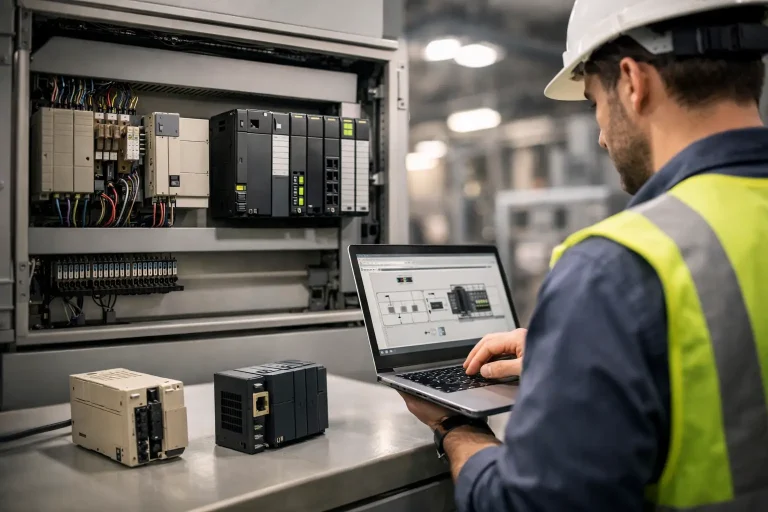
An engineering workstation can change controller logic, modify HMI screens, update drives, alter recipes, or download safety programs. Its risk profile is fundamentally different from a standard office computer, yet many facilities still manage both categories the same way.
In 2026, stronger programs will define dedicated standards for engineering assets. These may include application allowlisting, controlled use of removable media, local administrator restrictions, hardened configurations, approved software baselines, and protected storage for project files. Portable engineering laptops require the same discipline because they often move between plants, OEM sites, and production cells.
Patch management remains necessary, but timing matters. Applying a patch without testing can interrupt a critical software dependency or invalidate a vendor-supported configuration. Plants should establish a risk-based maintenance process that identifies which assets can be patched quickly, which require a test environment, and which need compensating controls until an outage window is available.
5. Safety and Cybersecurity Will Be Managed as Connected Risks
Cybersecurity and functional safety have often been handled by separate teams. That separation is becoming less defensible as more safety PLCs, safety HMIs, networked drives, and safety instrumented systems depend on digital configuration and communications.
A cyber event does not need to defeat a safety function to create a safety concern. Loss of visibility, incorrect alarm behavior, unauthorized logic changes, or a poorly controlled restart can increase operational risk. Conversely, security controls that block access to a safety system during an abnormal event can create an unacceptable response delay.
The practical response is to include cyber scenarios in hazard reviews, management-of-change procedures, and recovery planning. For safety instrumented systems, this should align cybersecurity controls with the lifecycle disciplines used for IEC 61511 compliance: defined responsibilities, documented configuration, testing, proof-test records, and controlled changes. Safety validation should confirm that security-related modifications do not affect required safety functions.
6. Backup Strategy Will Move From Data Protection to Restoration Proof
Backups are frequently treated as complete when files have been copied to a server or cloud repository. For industrial automation, that standard is too low. A usable recovery set must include validated PLC and safety PLC programs, HMI and SCADA project files, virtual machine images, switch and firewall configurations, drive parameters, licenses, drawings, and current I/O documentation.
Version control is equally important. Restoring an outdated controller file can introduce defects or remove approved process changes. Plants need a defined source of truth, change records, and a process for confirming that field logic matches the approved backup.
Recovery drills should be scoped by consequence. A low-risk standalone machine may warrant a desktop review and periodic file validation. A high-throughput line or continuous process may justify a controlled restoration test, spare hardware strategy, and documented restart sequence. The correct investment follows the cost of downtime, quality loss, environmental exposure, and safety risk.
7. Cybersecurity Governance Will Become More Plant-Specific
Corporate policies often establish useful minimum requirements, but plant-level implementation determines whether those requirements protect operations. A policy stating that all systems must be patched, for example, does not resolve a legacy HMI that cannot tolerate the latest operating system update.
Effective governance assigns ownership across IT, OT engineering, maintenance, operations, and EHS. It defines who approves changes, who maintains backups, who responds to alerts, who can authorize remote access, and who decides when production risk outweighs immediate remediation. NIST Cybersecurity Framework 2.0 can help organize these responsibilities, while IEC 62443 provides more specific guidance for industrial control system environments.
A lifecycle automation audit can expose the gaps that are easy to miss in policy reviews: unsupported PLC platforms, unmanaged switches, missing drawings, obsolete antivirus exclusions, untested backups, unsecured panel ports, and unclear ownership of vendor connections. SIS Automations approaches these findings as engineering and operating issues, not just compliance items.
Build the 2026 Roadmap Around the Next Failure
The most useful cybersecurity roadmap starts with a realistic failure scenario: an engineering workstation is encrypted, a vendor account is compromised, or a SCADA server becomes unavailable during a production shift. Work backward from the required safe state and recovery time. Identify which systems, people, documentation, and decisions are needed, then close the highest-consequence gaps first.
That method produces a plan plant teams can execute. It protects uptime without treating production as an afterthought, and it gives cybersecurity the same discipline manufacturers already apply to reliability, quality, and process safety.