Functional Safety Assessment Process Explained
A shutdown demand is the worst time to learn your Safety Instrumented System was never independently assessed. By that point, the issue is no longer theoretical. It affects process risk, compliance exposure, startup confidence, and in some cases whether production can continue. That is why the functional safety assessment process matters. It is the formal checkpoint that determines whether a safety lifecycle activity, or a full SIS application, meets its specified safety requirements and aligns with IEC 61511 expectations.
Thank you for reading this post, don't forget to subscribe!For plant teams, this is not just a documentation exercise. A proper assessment tests whether hazard assumptions still match the real process, whether SIS design decisions were implemented correctly, and whether operation and maintenance practices can actually sustain the required risk reduction over time. If any of those pieces are weak, the gap shows up later as nuisance trips, proof test failures, audit findings, or unmanaged process risk.
What the functional safety assessment process is meant to prove
Under IEC 61511, a functional safety assessment is an investigation based on evidence. The point is independence and objective verification. The assessor is not simply reviewing whether a project team followed its own internal checklist. The assessor is determining whether the SIS and supporting lifecycle work satisfy the safety requirements specification, applicable standards, and the intended risk reduction target.
That distinction matters. Many plants have strong internal engineering teams and still benefit from assessment because familiarity can hide assumptions. A system may be well built from a controls perspective and still fall short from a safety lifecycle perspective. Common examples include incomplete cause-and-effect logic, undocumented bypass management, proof test intervals that do not support the claimed SIL, or operator response assumptions that were never validated in the field.
The assessment can apply at different stages. In some cases it is tied to a project gate before startup. In others, it is triggered during modification, after a lifecycle audit identifies concerns, or when an owner needs evidence for insurance, corporate governance, or regulatory review. The scope depends on the application, but the objective stays consistent: confirm that the SIS is fit for service in its safety role.
Where the functional safety assessment process fits in the SIS lifecycle
The functional safety assessment process is not the same as a hazard analysis, SIL verification, or proof testing program. It sits across the lifecycle and checks whether those activities were completed adequately and whether their outputs are technically consistent.
A hazard and risk analysis identifies hazardous scenarios and determines where instrumented protection is required. The safety requirements specification translates those needs into clear performance, logic, response, diagnostics, and testing requirements. Design, programming, installation, and validation then implement that specification. The assessment reviews those lifecycle elements and determines whether the overall package supports safe operation.
In IEC 61511 terms, functional safety assessment is expected at key lifecycle stages. Most plants focus heavily on the pre-startup assessment because that is where deficiencies become operationally expensive. Still, a late-stage assessment cannot fix weak front-end definition. If the hazard analysis is shallow or the safety requirements specification is vague, the assessment will surface that problem, but the project may already be facing rework, delays, or compromise decisions.
What a competent assessment typically reviews
A credible assessment starts with scope. The assessor needs to know which SIS functions are included, what lifecycle stage is being assessed, what standards apply, and what independence level is required. From there, the review is evidence-based.
Documentation usually includes process hazard analysis records, LOPA or other SIL determination work, the safety requirements specification, architecture drawings, instrument data, logic narratives, cause-and-effect matrices, software documentation, test records, management of change records, operating procedures, maintenance procedures, and proof test plans. On complex sites, alarm management strategy, cyber considerations, and basic process control system interactions may also need review because those interfaces affect safety assumptions.
Field verification is equally important. A paper-compliant SIS can still fail in the plant due to installation deviations, incorrect device configuration, inaccessible test points, labeling problems, bypass practices, or poor separation between BPCS and SIS components. For that reason, the strongest assessments are not done from a desk alone. They compare documents to the installed system and to actual operating practice.
Competence and independence are part of the assessment itself. The standard expects the assessor to have the technical capability to evaluate the work and enough organizational independence to make an objective judgment. That does not always mean using a third party, but it does mean the reviewer cannot simply assess their own design decisions without credible separation.
Common findings that delay approval or increase risk
Most assessment findings are not dramatic design failures. They are usually lifecycle breakdowns that accumulated quietly across the project. The safety requirements specification may define a trip function but omit process safety time, safe-state behavior, reset philosophy, or proof test coverage assumptions. Logic may match the narrative but not the approved cause-and-effect matrix. Device selections may be acceptable for control service but not well suited for the diagnostic coverage or failure mode assumptions used in SIL verification.
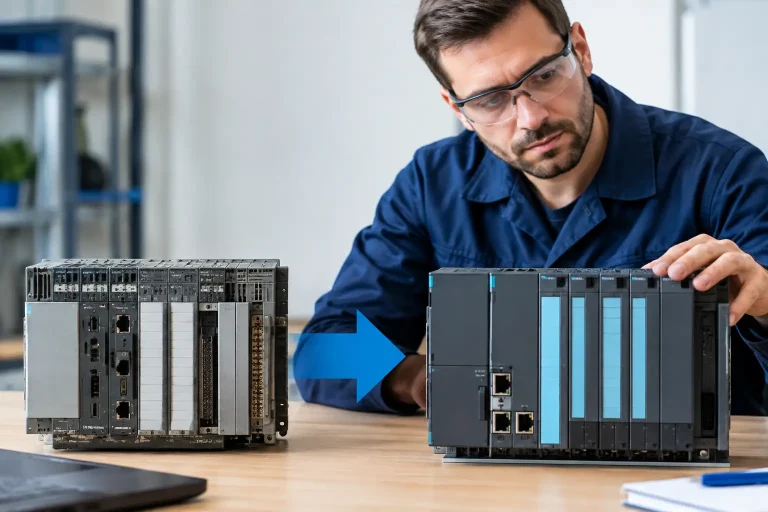
Another frequent issue is the gap between startup readiness and long-term maintainability. A loop may pass validation testing, but if proof test procedures are generic, spare part strategy is weak, and bypass control is informal, the required performance will degrade quickly after handover. Plants with aging infrastructure often see this problem during modernization projects, where a new safety PLC is installed into an operating environment that still depends on legacy documentation and tribal knowledge.
Assessment findings also tend to expose interface problems. Operators may not have clear guidance on alarm response before a trip occurs. Maintenance may not know which forced states require formal authorization. Control system changes may affect safety function timing without being routed through SIS management of change. These are not just administrative gaps. They directly affect whether the claimed risk reduction is real.
How to get value from the process, not just pass it
Plants get the best results when they treat assessment as a project control measure rather than an end-stage inspection. Bringing assessment thinking into front-end engineering improves the quality of the hazard review, sharpens the safety requirements specification, and reduces interpretation problems during programming and commissioning.
It also helps to separate compliance from performance, while recognizing that both matter. A plant may technically satisfy minimum documentation requirements and still operate with frequent trips, hard-to-test loops, or excessive maintenance burden. A useful assessment challenges those conditions because poor operability eventually becomes a safety issue. If operators lose confidence in trip behavior or maintenance teams normalize overrides, the protection layer is weakened regardless of how complete the project binder looks.
That is why experienced assessors ask practical questions. Can the device actually be proof tested at the installed location? Is the voting arrangement maintainable during outages? Does the trip logic account for startup and abnormal modes? Are response times based on real process dynamics or inherited assumptions? Those questions connect standards compliance to production reality.
For owner-operators, there is also a business case. A disciplined assessment reduces startup surprises, prevents late rework, improves insurer and auditor confidence, and supports more stable operation after commissioning. It can also help prioritize modernization spending. If multiple legacy SIFs show documentation, testing, or architecture weaknesses, the plant can target upgrades where risk reduction and reliability gains are most meaningful.
Choosing the right level of support
Not every facility needs the same assessment model. A greenfield SIS project with multiple high-demand safety functions, integrated burner management, or complex batch sequencing usually warrants deeper review and stronger independence. A smaller modification may need a narrower assessment focused on impacted SIFs and management of change controls. The right approach depends on hazard severity, lifecycle maturity, documentation quality, and internal functional safety competence.
What does not work well is treating all projects the same. Over-scoping creates delay and assessment fatigue. Under-scoping creates false confidence. A capable engineering partner will define what needs to be reviewed, what evidence is required, and where field verification should focus so the assessment effort matches the actual risk.
When SIS Automations supports this work, the goal is not to generate paperwork for its own sake. It is to verify that the instrumented protection strategy, control implementation, and operating practices will hold up under real plant conditions.
The best time to ask whether your SIS will pass a functional safety assessment is long before someone schedules one. If the lifecycle evidence is clear, the field implementation matches the design intent, and operations can maintain the protection layer without workarounds, the assessment becomes what it should be: confirmation that safety and production are aligned.